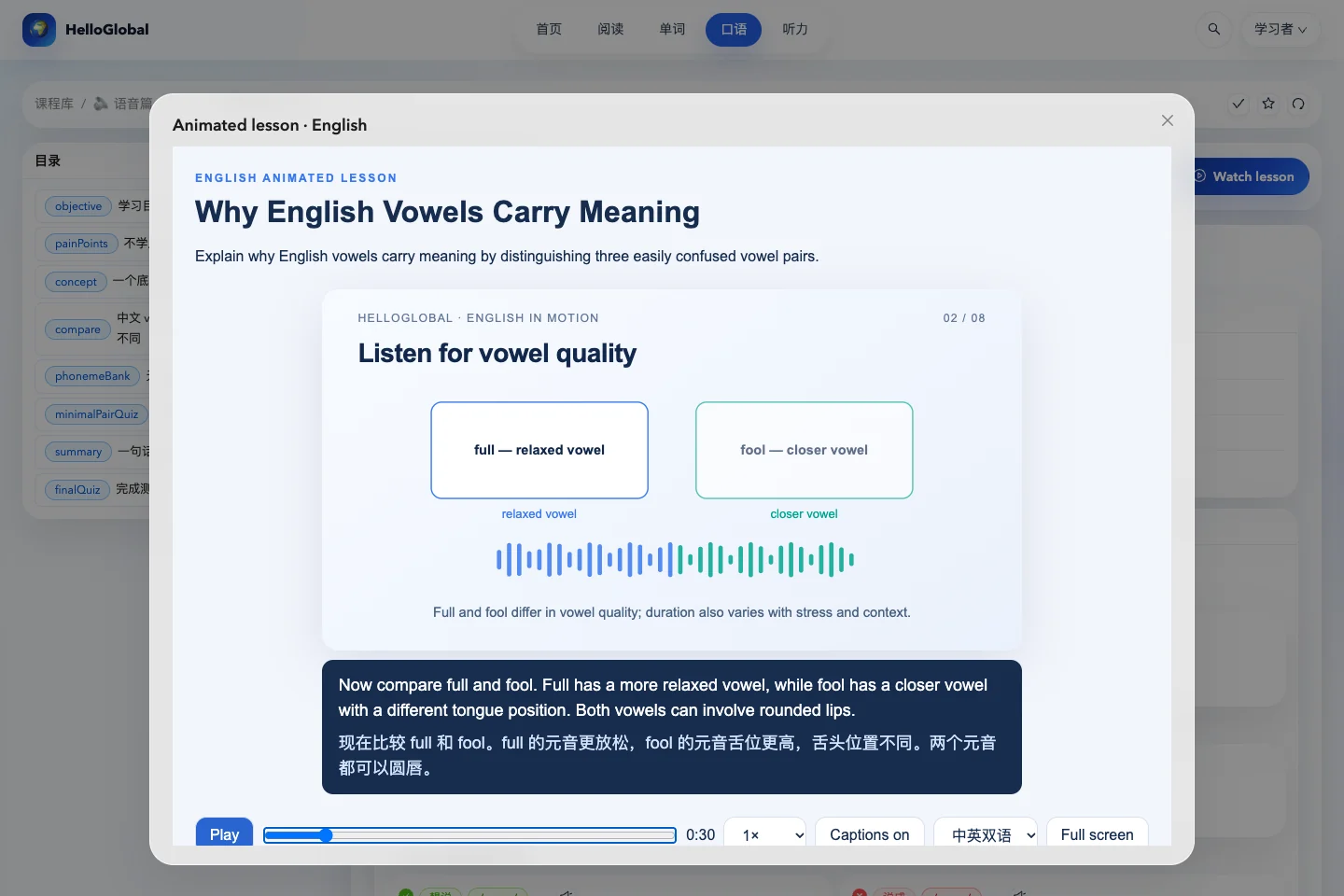
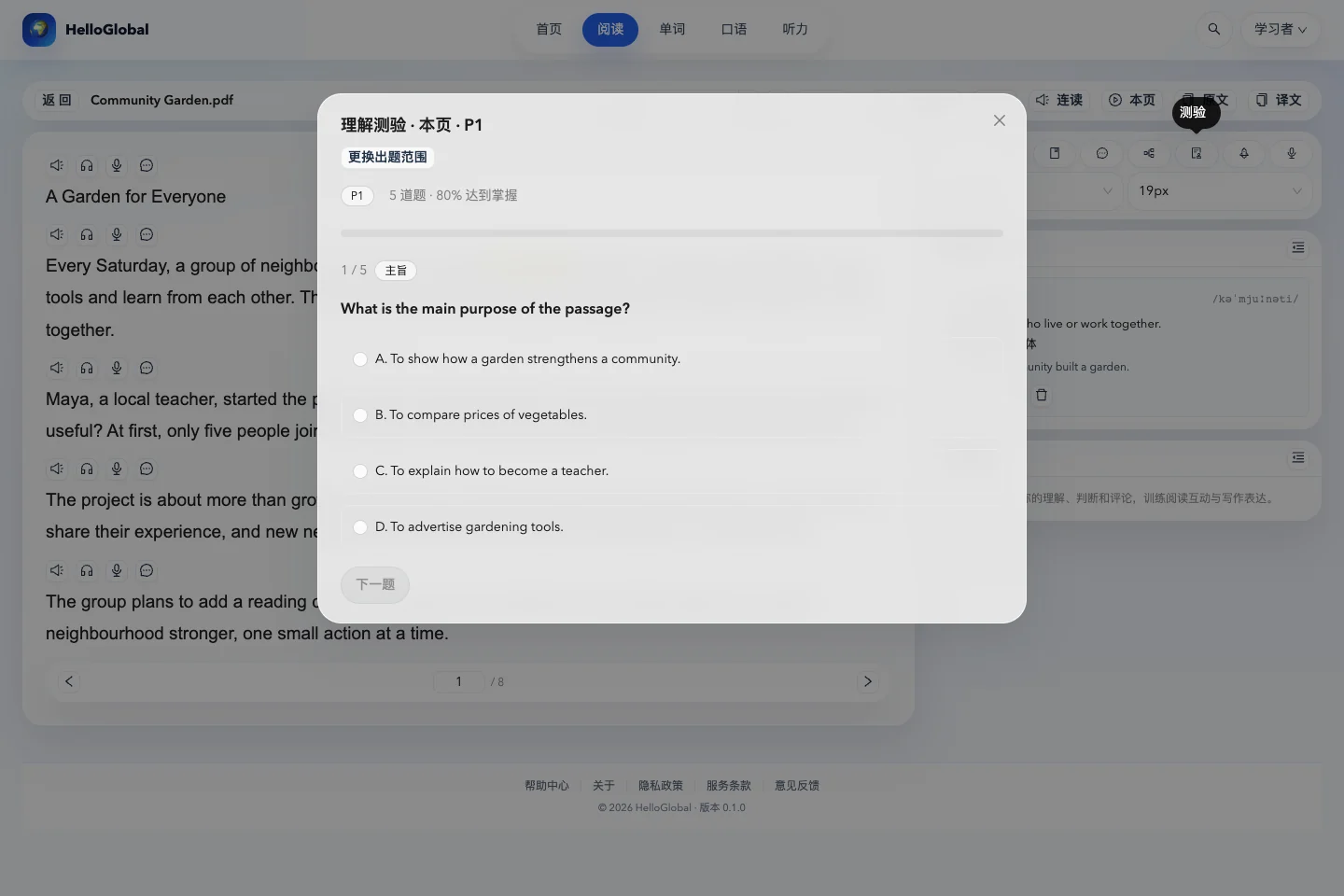
Students practising English speaking at A2 level, and parents helping their children practise.
Start with a familiar topic
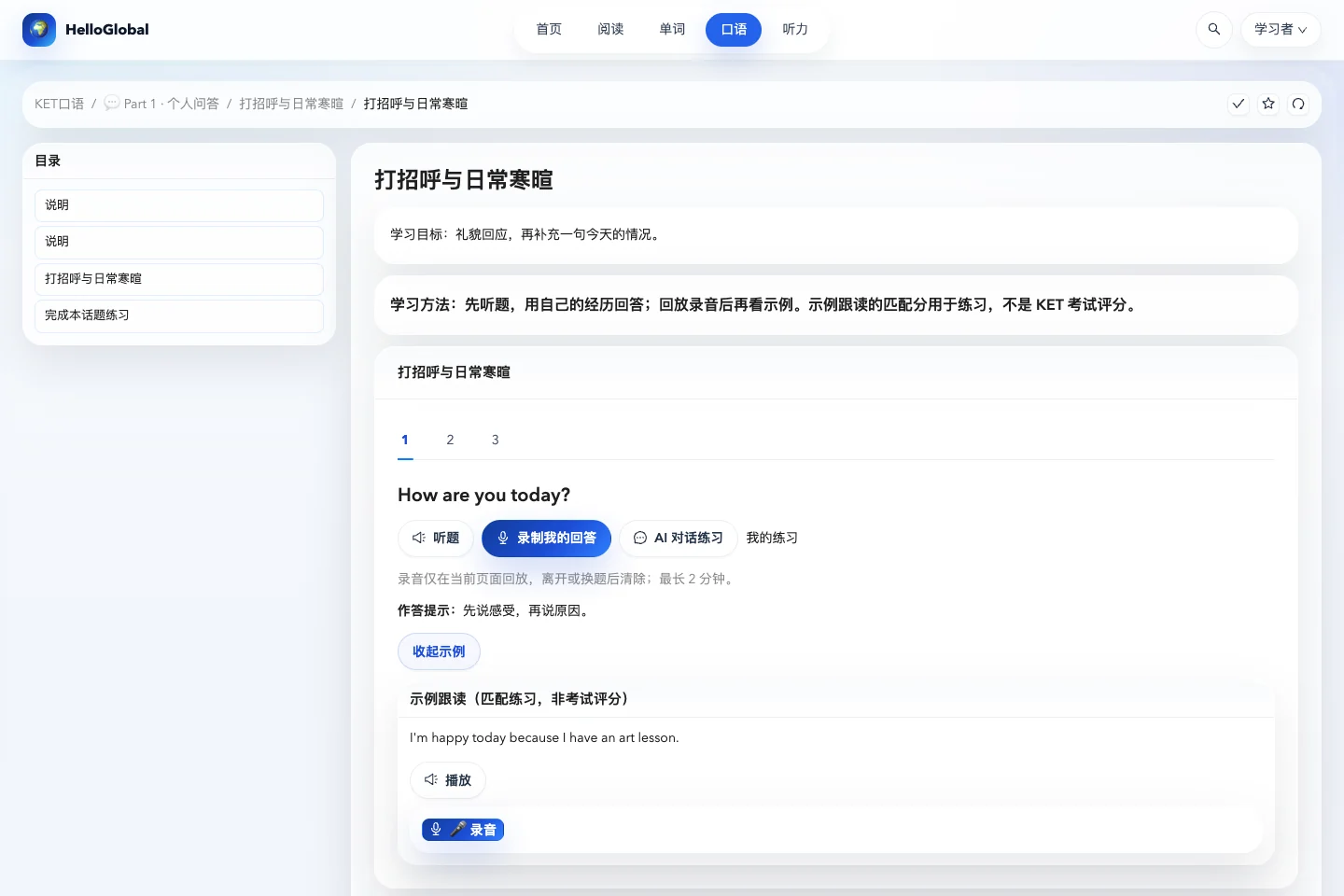
Open Speaking, enter KET speaking, and choose a lesson on greetings, family or everyday life. Listen to the question and work out whether it asks about a person, a habit, a preference or a reason. Then try an answer independently.
If you need support, expand the examples and shadowing section. An example offers a sentence structure, but the names, people and experiences should become your own. For a child, explaining something real is more useful than memorising a long answer unrelated to their life.
Add one detail to a clear answer
For the practice question What do you do at the weekend?, try three steps:
- Give a direct answer: I play football.
- Add a person or a place: I play football with my friends in the park.
- If you can say more, add a reason: I like it because it is fun.
These are original practice examples, not fixed answers to memorise. Replace football with drawing, reading or another real activity. Improve one thing at a time, such as including the subject or making the time reference clear.
Use your prepared sentences in an AI conversation
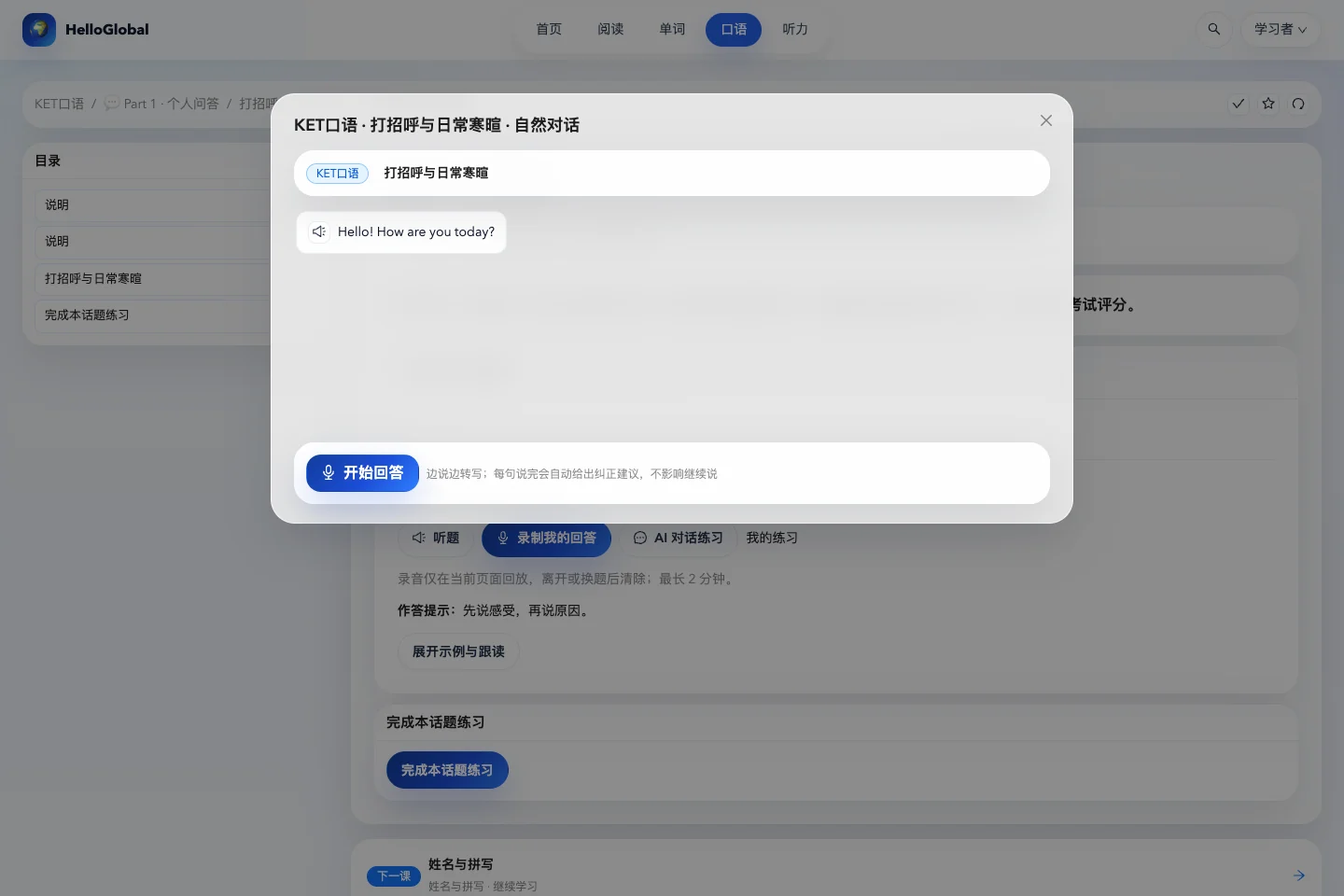
Open AI conversation within the lesson. Listen to the question, select Start answering, and send your response when you finish. The AI follows up using the conversation, so practice can continue beyond a single question and answer.
If a question is unclear, ask for a repetition or a different wording before answering. Parents can help a child understand the question while leaving the child to do the speaking.
KET conversations are designed around basic English expression. IELTS topics and reading discussions serve different purposes; there is no need to begin with a more complex mode. Microphone permissions and network connectivity affect recording and replies. If a request fails, use the retry control provided in the interface.
Revisit a correction and say the sentence again
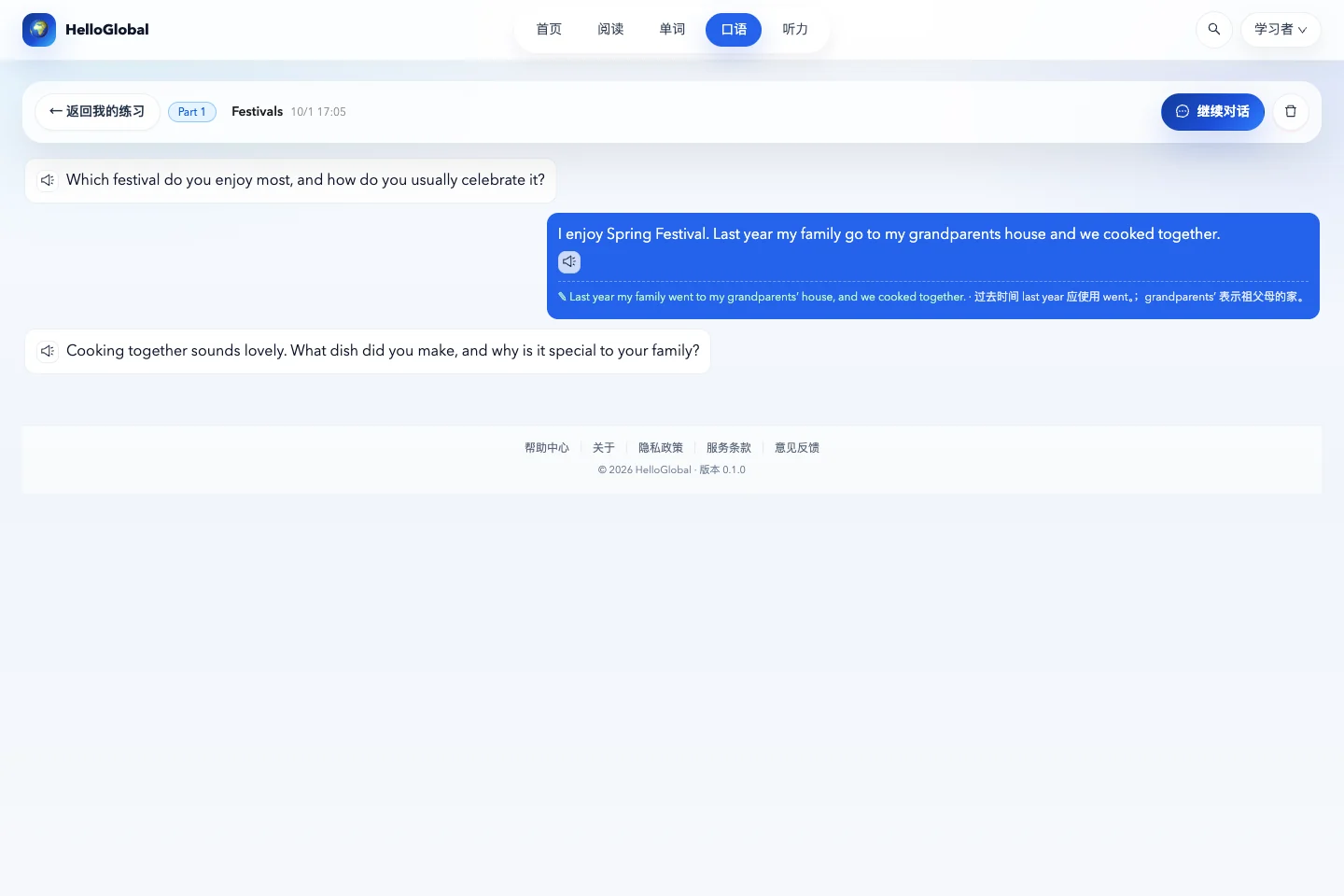
Open a saved conversation from My practice. Replay the AI’s questions and review your responses and suggested corrections. Choose one sentence you want to improve and say it again in your own voice.
For example, you might revise My family go to my grandparents house to My family goes to my grandparents’ house, then use it in a complete answer. This illustrates a review activity; it is not a requirement to master every grammar point in one session.
You can also continue an existing conversation. Lesson activities and AI feedback are learning support, not official Cambridge examination scoring.
Frequently asked questions
Do I need to write an answer first?
No. Start by saying a short sentence, then use an example to help add detail. The goal is to express your own meaning.
Should I restart every time I make a mistake?
You can finish your thought before correcting one important issue. When reviewing the conversation, say the improved sentence again so that the feedback becomes part of your next attempt.