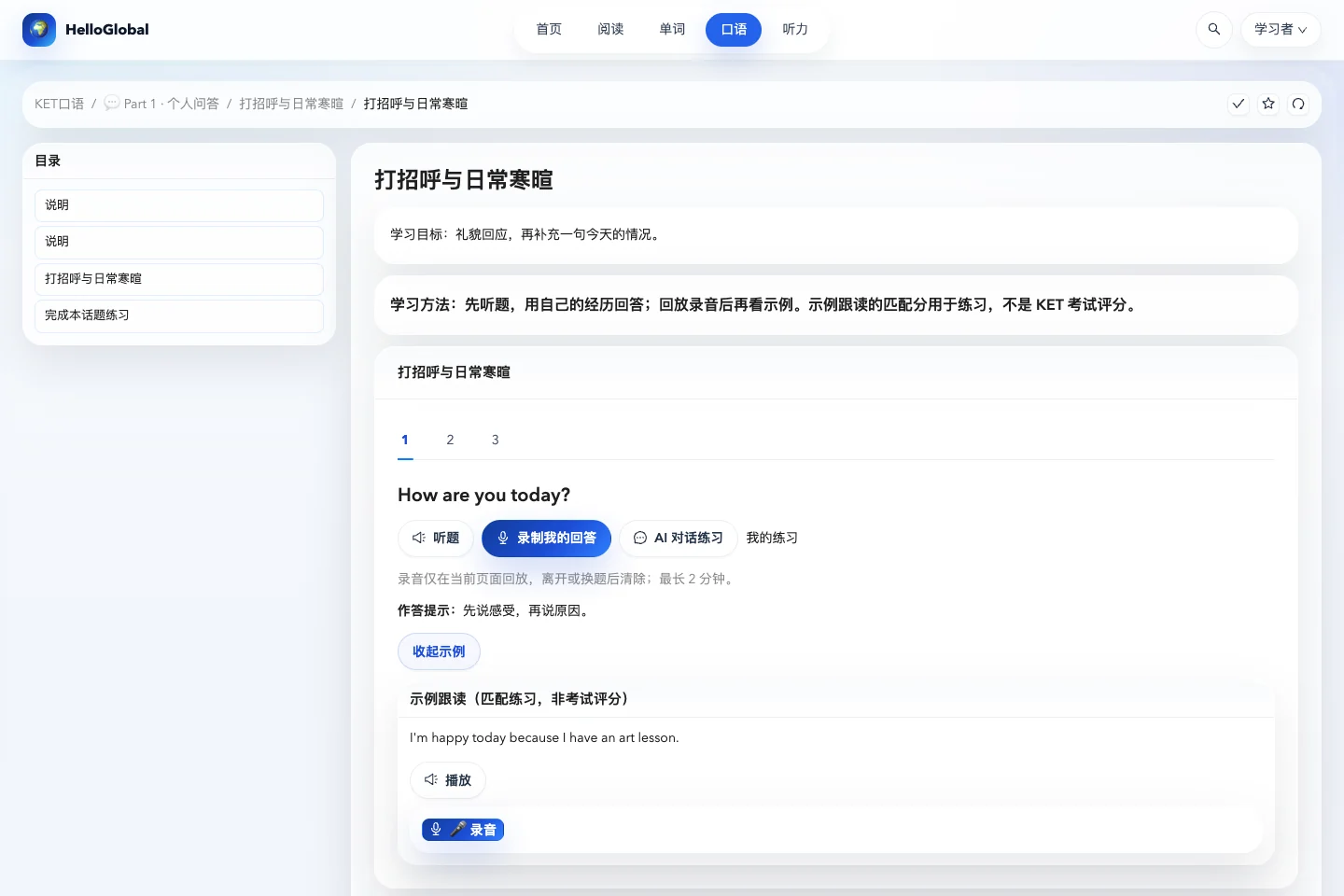
Learners building English pronunciation, grammar and basic expression who also want opportunities to speak.
Bring one question to the lesson
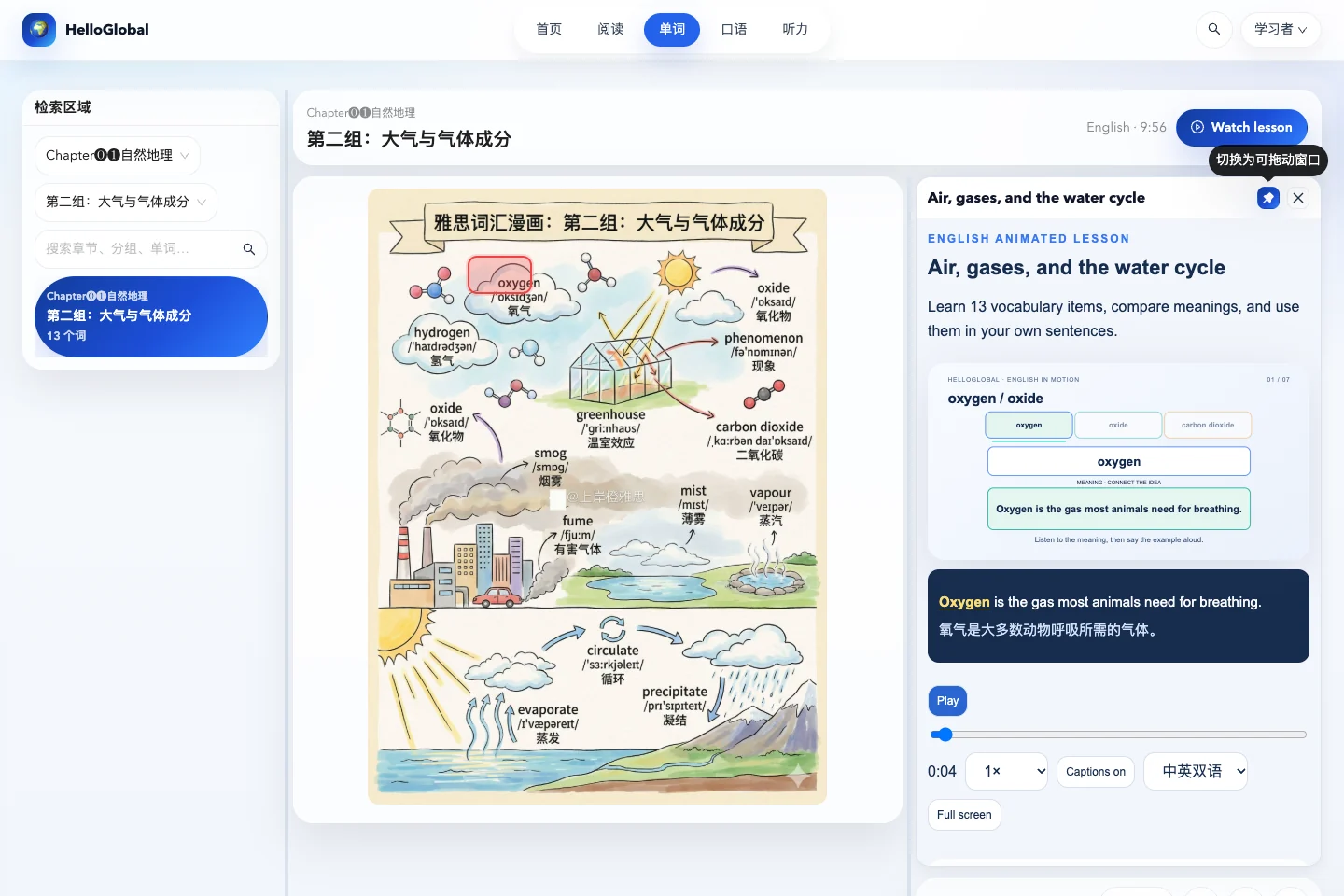
Open a notes lesson or daily practice section in Grammar and speaking foundations. Find the Animated lesson card and select Watch lesson. The title helps you identify the focus.
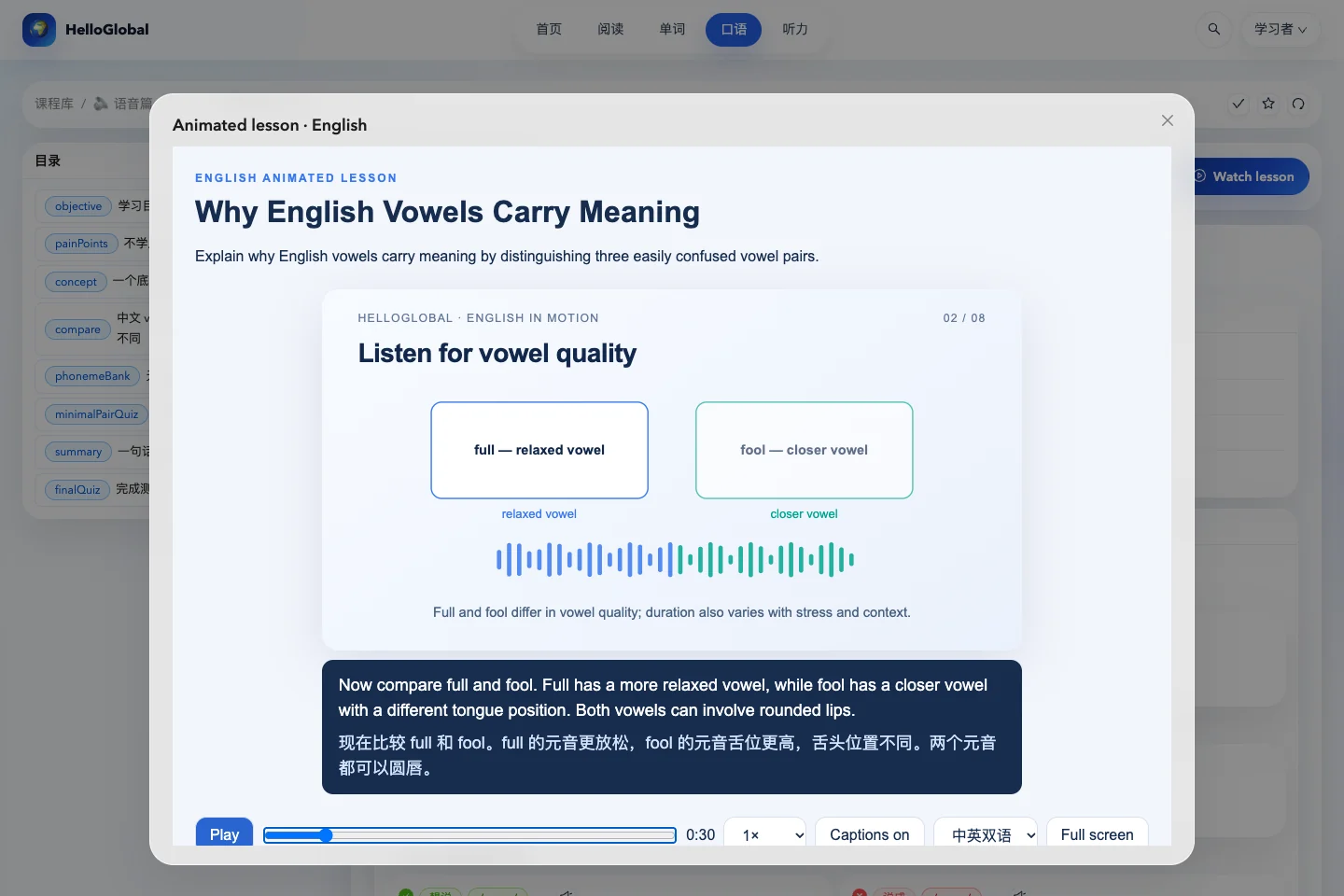
For a vowel lesson, you might ask: Is the difference between full and fool only about length? Listen to the explanation, then observe any comparisons of mouth position, vowel quality or example sentences. This is an example of a learning question; follow the content of the lesson you have selected.
Use captions to understand, then check what you can hear
Keep bilingual captions on when a concept is unfamiliar. Once it is clearer, switch to English and listen again to check whether you can hear the key words in the explanation. Changing the captions does not change the English narration into Chinese.
You can pause, seek through the lesson and adjust the speed. Slow down a difficult sentence temporarily, then return to normal speed after hearing it clearly. Reading every caption is not the same as understanding the audio: look away and try to repeat one sentence.
Turn the explanation into your own response
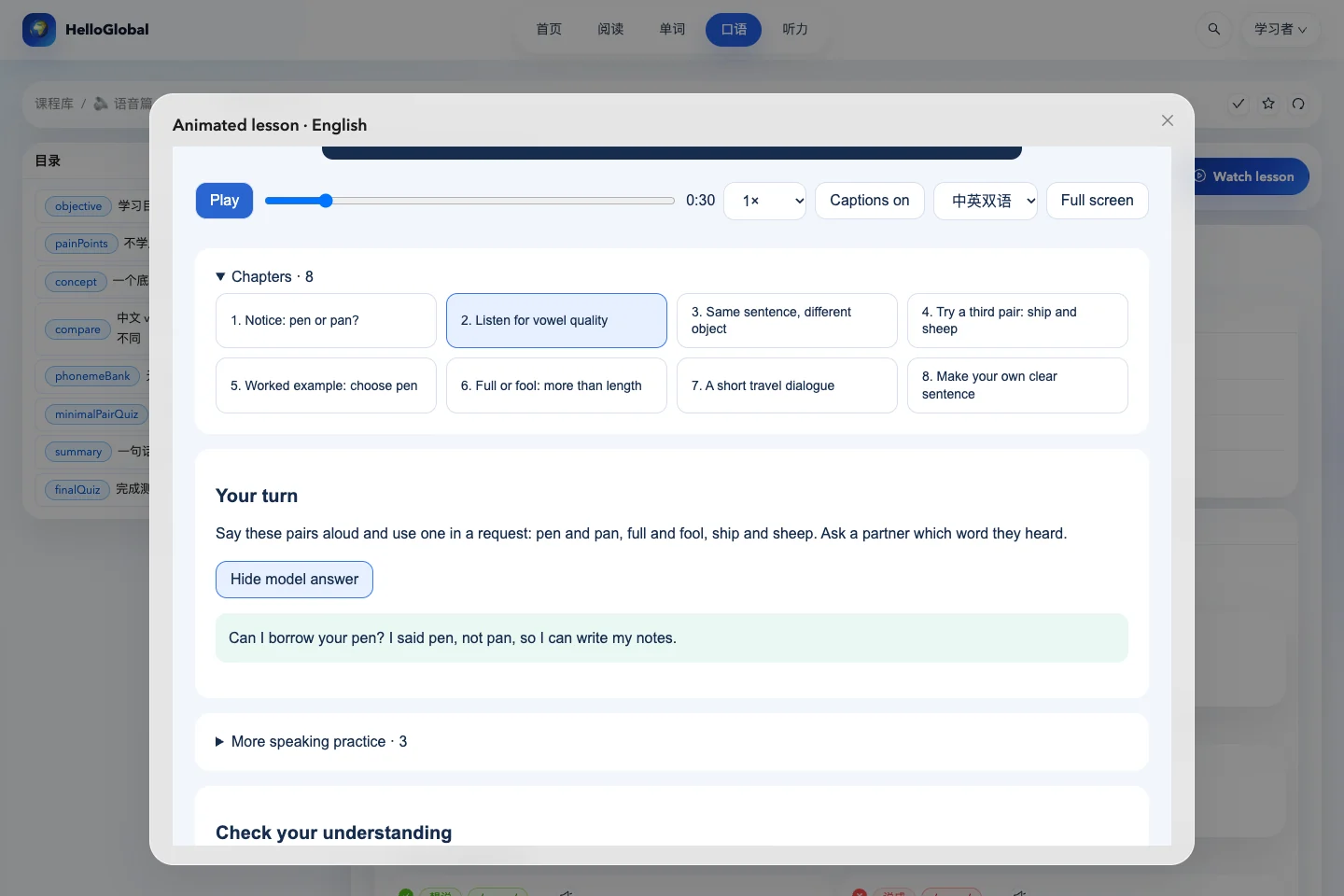
Scroll to Chapters to replay a particular section. Your turn gives you a speaking task. Answer first, then select Show a model answer to compare your response.
Comprehension checks help you see whether you understood a distinction. If you choose an incorrect answer, revisit the relevant section and identify how the concepts differ. The questions, model answers and chapter directory belong to the current short lesson.
For example, try making a request with a given group of words. Then check whether the model answer adds a recipient or a clearer context. This turns the explanation into something you can do with language.
Return to the lesson: listen, say it, then check
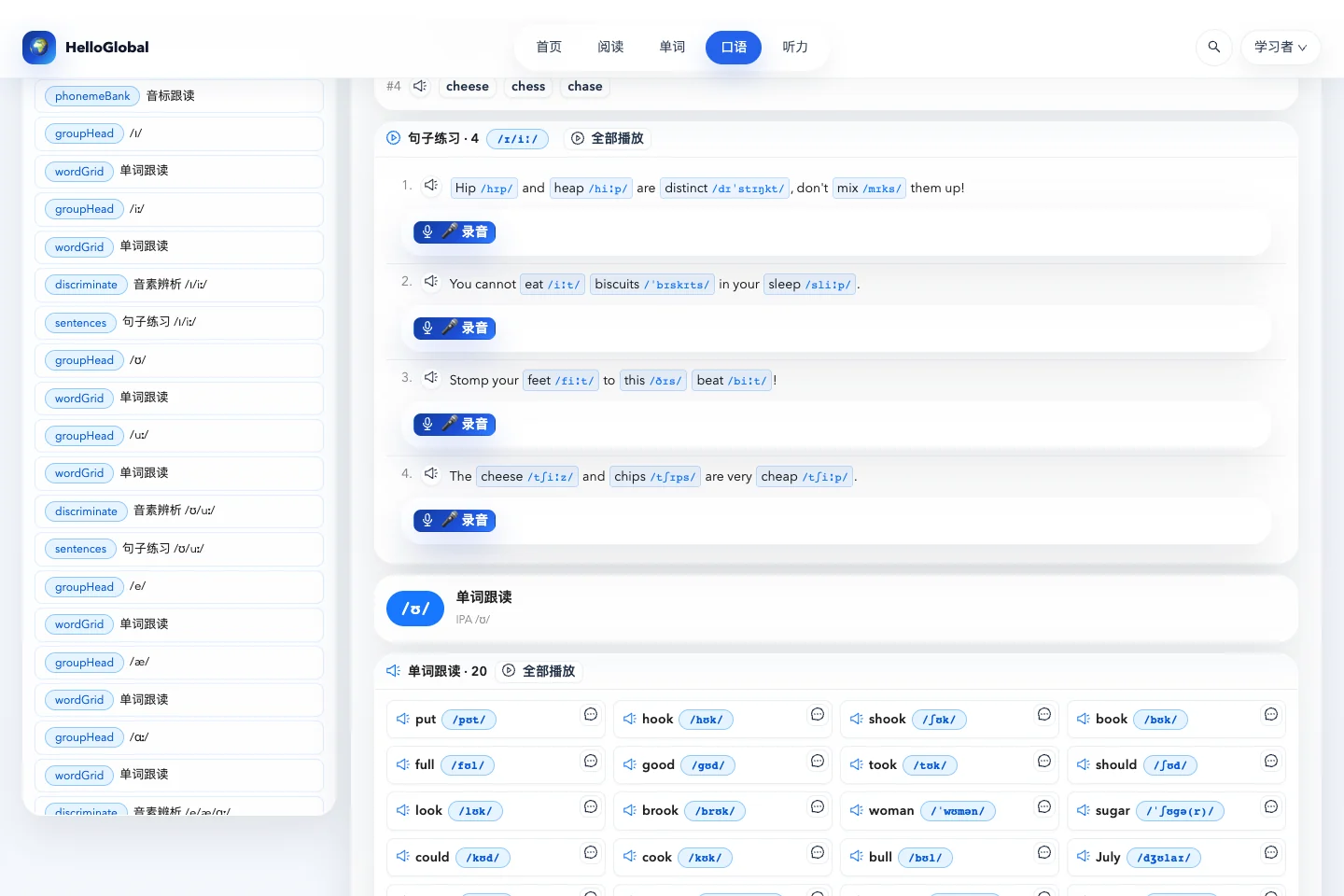
The lesson page also provides sentence activities and shadowing outside the animation. Listen to the model, record yourself and compare the recognised text for missing words or word-order problems. Repeat the sentence that most needs attention.
Speech recognition and matching feedback can help identify issues, but they are not a complete assessment of your accent. Recognition can also make mistakes, so compare the original audio with your own recording.
The end-of-lesson test and the animation’s comprehension checks are separate activities. After finishing, mark your learning progress. Use favourites or the course directory to return for review.
Frequently asked questions
Do I have to choose between the animation and the notes?
No. An animation can introduce an idea, notes help you revisit definitions and examples, and shadowing and tests give you opportunities to practise.
What if a child cannot understand English-only captions?
The player supports bilingual English–Chinese captions and Chinese-only captions. Use Chinese to clarify the concept, then return to English for listening practice. The narration remains in English.