Readers exploring Chinese literature or using familiar-language guidance to navigate the learning tools.
Read and listen to the same work
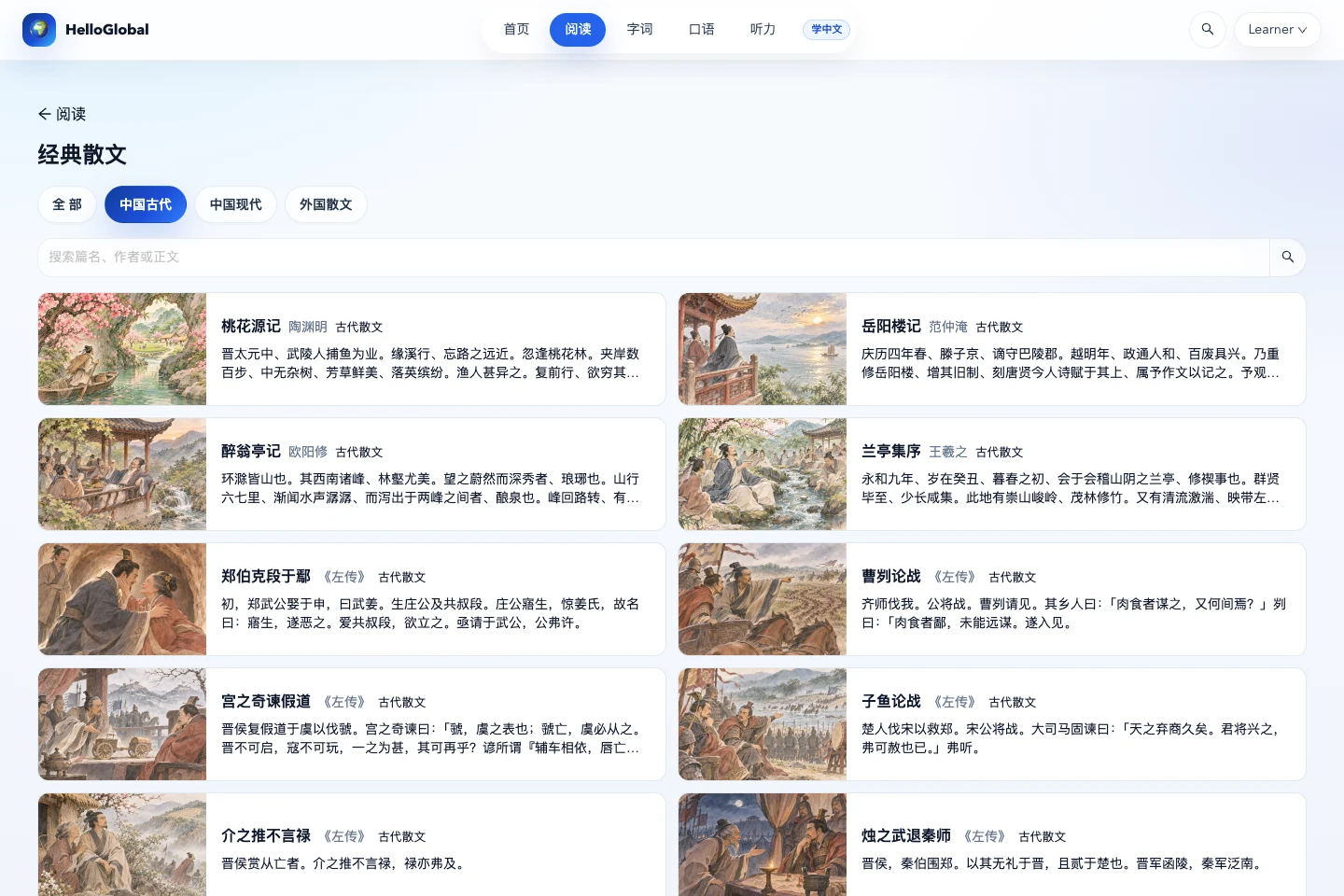
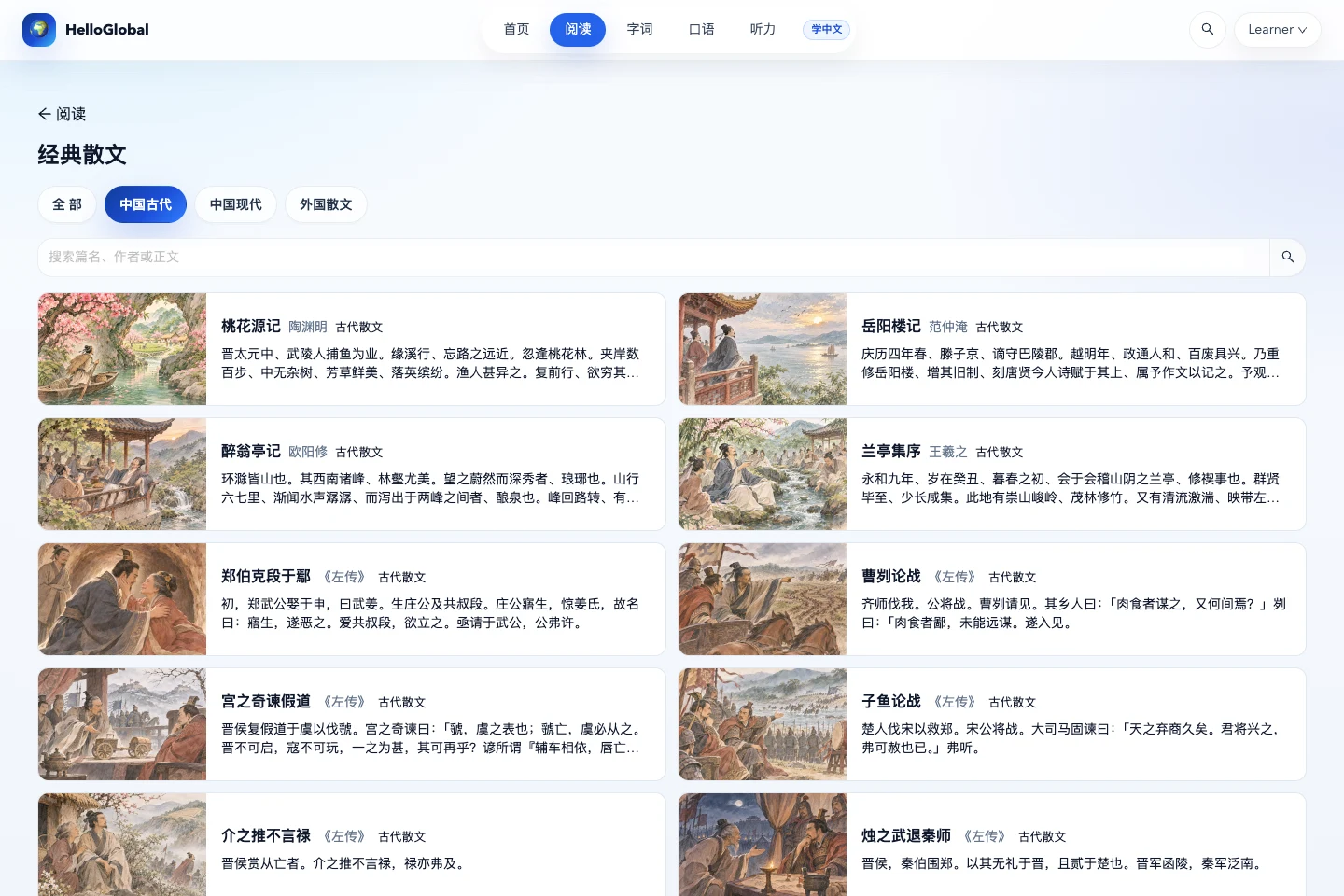
Chinese Reading and Listening provide entries for prose, Tang poetry and Song lyrics. Prose can be filtered by ancient Chinese, modern Chinese or international works, and searched by title or author. Start with a manageable piece, read or listen once for its overall meaning, and then pause over individual passages to investigate the language.
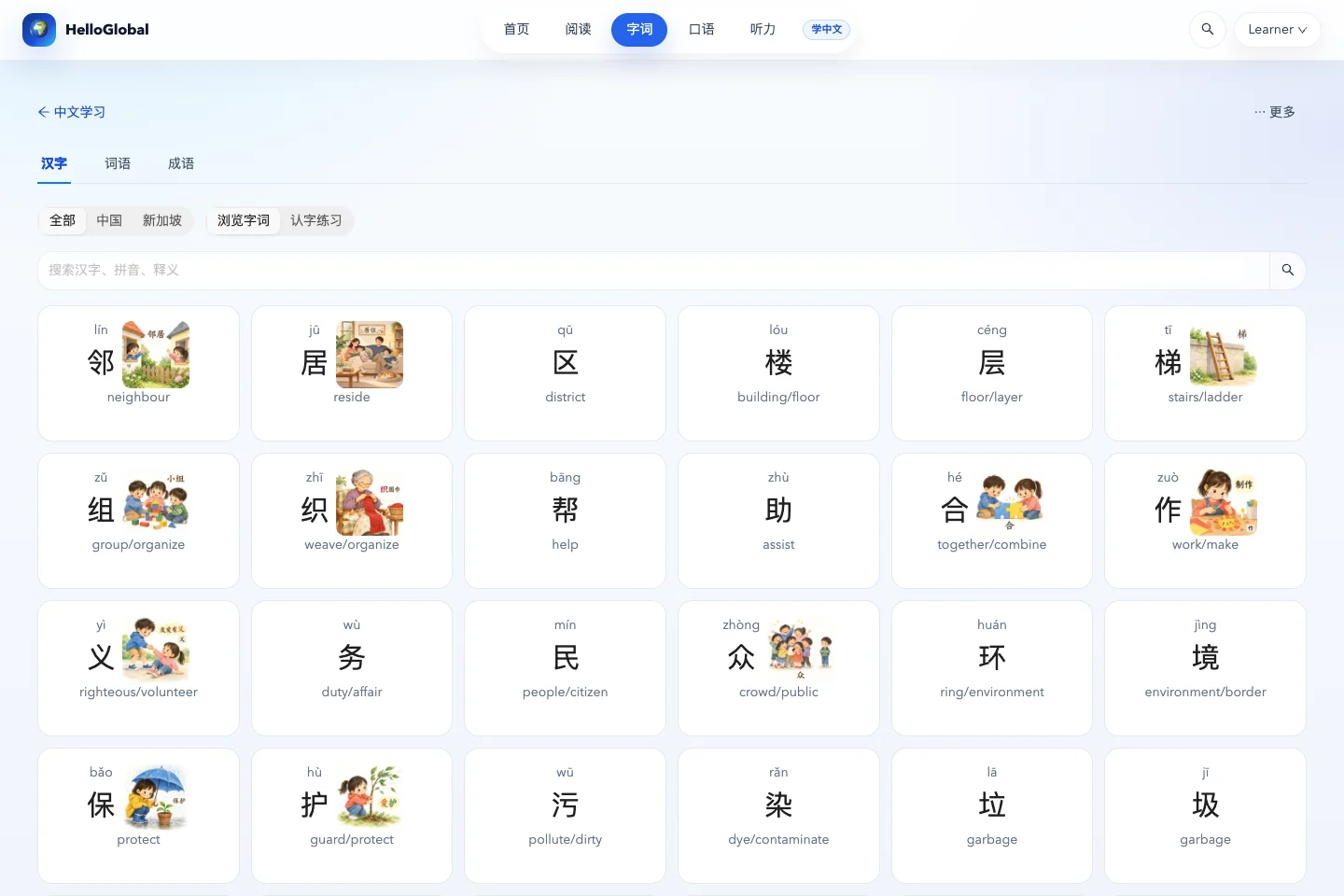
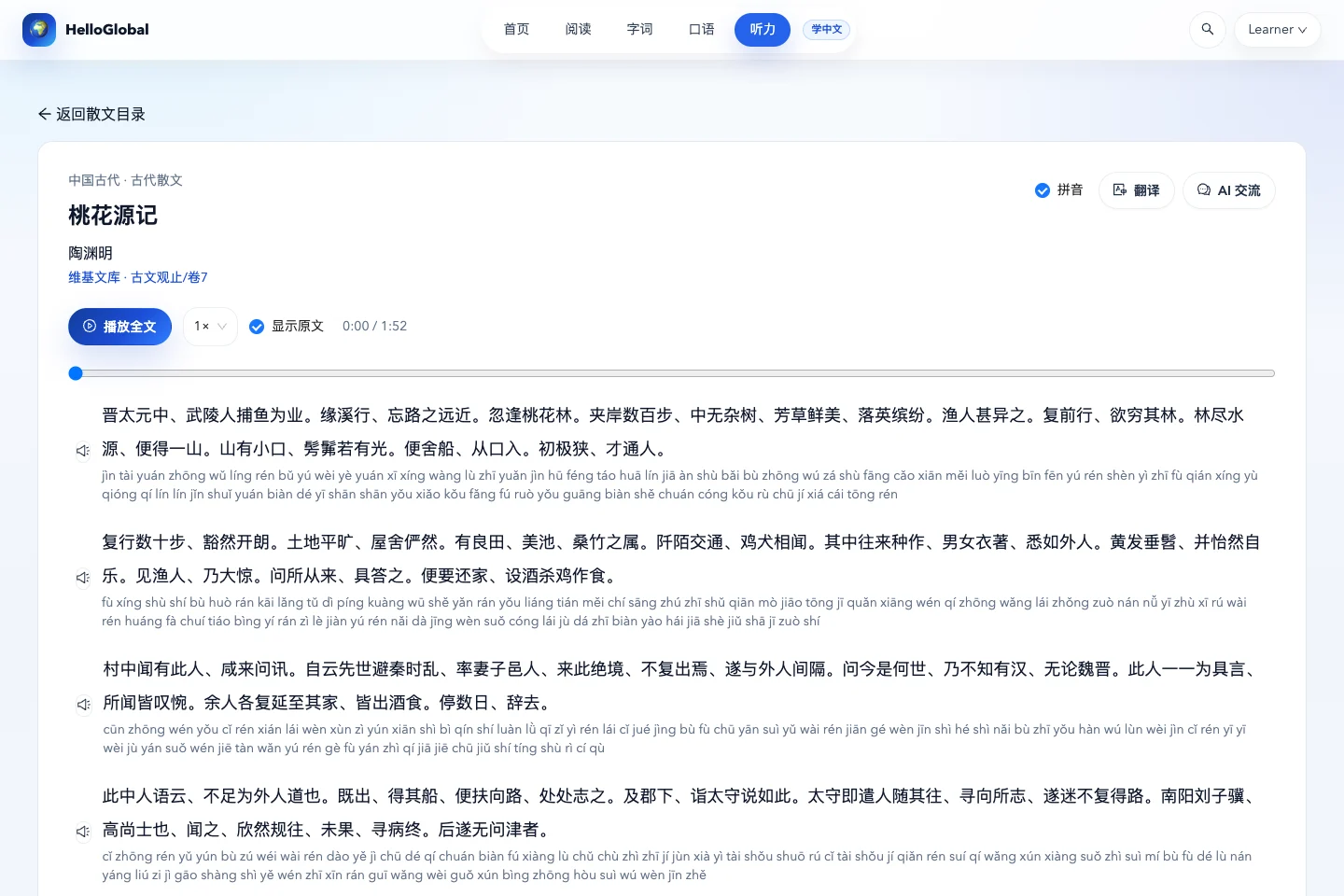
Both modules use the same literary content. Reading supports vocabulary and sentence understanding; Listening can hide the text until after you listen and offers passage dictation. Earlier topic lessons, uploads and picture books remain available under More when those materials suit your study session.
Interface language does not replace the learning material
The interface supports Chinese, English, Malay, Bengali, Japanese, Korean, Mongolian, Filipino, Indonesian and Vietnamese. Settings lets you choose interface language separately from learning direction. English lessons keep their English examples and recordings, while Chinese lessons keep their Chinese texts and Mandarin pronunciation. Changing menu language therefore does not turn the source material into a different course.
If a control is unfamiliar, open the Help centre in the same language and follow its steps. During study, use translation when needed and return to the original to check your understanding. Interface translation, literary translation and pronunciation are separate forms of support rather than settings that must always be enabled together.
Frequently asked questions
Does an English interface replace the Chinese text?
No. The original remains available, with translation as a separate aid.
Where are the earlier topic lessons?
Use More in the relevant module.